
Getting Started with the Pomodoro Technique
A step-by-step introduction to the 25-minute work interval method. Simple, no special tools required, and proven effective across different work styles.
Read GuideWhy you get distracted, how to identify your biggest triggers, and tested methods to stay on track.

It’s not laziness. It’s not lack of willpower. Distraction is a design problem — and your environment, habits, and brain chemistry are all working against you.
The truth is you’re not broken. Your brain’s actually doing exactly what it evolved to do: notice changes, respond to threats, and seek novelty. In the modern workplace — especially in Hong Kong’s high-intensity work culture — that instinct becomes a liability. You’ll sit down to focus on one task, and within minutes you’re checking Slack, answering an email, or refreshing your inbox.
This isn’t a willpower problem. It’s a systems problem. And the good news? Systems can be redesigned.


Before you can fix a problem, you need to understand it. Not all distractions are created equal. Some come from your environment. Others come from your habits. And some are deeply wired into how your brain processes information.
Start with the obvious ones. Notifications — Slack messages, email alerts, phone buzzes. They’re not accidental. They’re engineered. Teams and Outlook have entire teams of people whose job is to make you respond faster. You’re not losing focus because you’re weak. You’re losing focus because very smart people are trying to get your attention.
Then there are the self-imposed distractions. You’ve opened your browser. You know you should work on that report. But opening a new tab “just to check” something takes you 20 minutes. By the time you’re back, you’ve lost your thread. Your brain needs 15-20 minutes just to rebuild the context you had before the distraction. That’s not wasted time — that’s compounded lost time.
And then there are the environmental distractions. Open-plan offices are a productivity nightmare. Someone’s having a conversation three desks over. Your colleague’s keyboard is loud. Someone’s eating chips. These things are small, but they fragment your attention constantly. You don’t notice each one individually. But together, they add up to maybe 40-50% of your productive capacity just… gone.

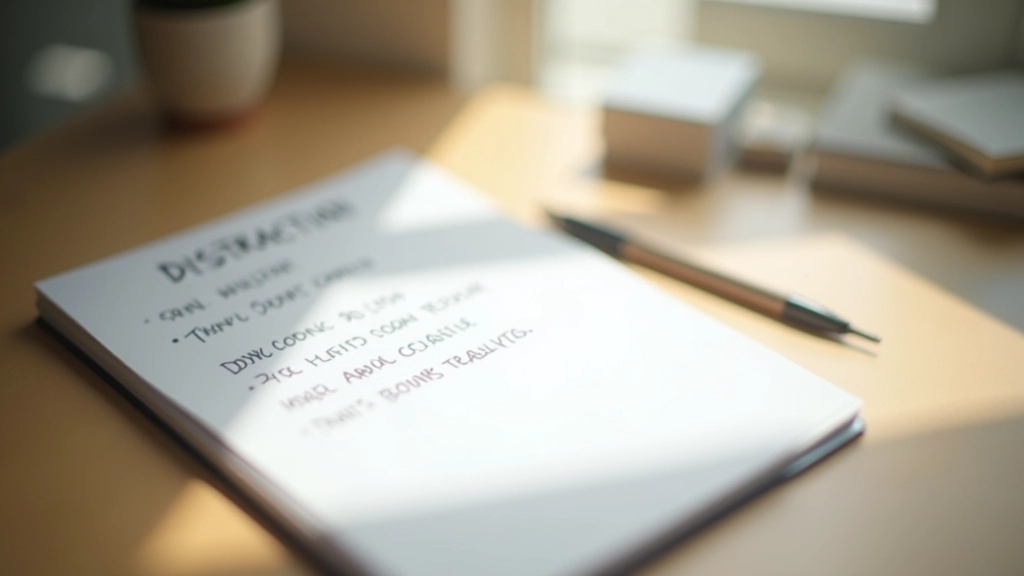
Here’s a practical exercise: Track your distractions for one full day. Not vaguely. Actually write them down. What pulled your attention away? Was it a notification? Did you get bored? Did someone talk to you? Were you avoiding something harder?
You’ll start to see patterns. Most people have 3-4 main distraction sources that account for 80% of their lost focus. For some people, it’s Slack. For others, it’s email. For a lot of people in Hong Kong especially, it’s the pressure to respond immediately to messages — the cultural expectation that you’ll reply within minutes.
Once you know your triggers, you can design around them. If it’s notifications, turn them off during focus blocks. If it’s Slack, set your status to “in deep work” and close the app. If it’s boredom or resistance, you might need a different approach — maybe shorter work intervals, or starting with an easier part of the task.
The key insight: You’re not fighting willpower. You’re engineering your environment so willpower becomes unnecessary.
Put your phone in another room during focus sessions. Not on silent. Not face-down. In another room. You won’t believe how much this single change reduces distraction-checking impulses. Your hand reaches for it out of habit, realizes it’s not there, and your brain resets to the task.
One browser window. One application. That’s it. Every other tab, every other app, gets closed. Yes, you can reopen it if you need it. But the friction of reopening it is often enough to break the distraction impulse and keep you focused on what matters.
Noise-canceling headphones with instrumental music or ambient sound (not podcasts — those require cognitive attention). The sound physically blocks environmental distractions. The headphones also signal to others: “Don’t talk to me right now.” It’s a boundary that actually works.
25 minutes on, 5 minutes off (or whatever interval works for you). The timer is your agreement with yourself. You commit fully for the interval. When the timer goes off, you can check messages, stretch, whatever. This structure removes the constant temptation to “just quickly check” something.
Keep a notebook nearby. When a distraction thought pops into your head (“I should check that email” or “I need to call someone”), write it down. Not in your head. On paper. This signals to your brain: “I’ve captured this. I’ll deal with it later.” Your mind can release it and go back to work.
Check email at set times (9 AM, 1 PM, 4 PM) instead of constantly. Turn off all notifications. This removes the random interruptions that fragment your day. Your team will adjust. Most things aren’t actually emergencies. And the ones that are? People will find a way to reach you.


Distraction isn’t a personal failing. It’s the default state when your environment and habits aren’t intentionally designed. You’re not weak for getting distracted. You’re human.
The good news? Once you understand your specific distraction patterns, you can build systems that make staying focused the path of least resistance. That’s not willpower. That’s design.
Start with one thing this week. Maybe it’s putting your phone in another room. Maybe it’s closing your unnecessary tabs. Maybe it’s setting a timer for one focused work session. Pick one. Test it for three days. Notice what changes.
Distraction management isn’t about perfection. It’s about progress. And it’s about recognizing that your ability to focus isn’t fixed — it’s a skill you can develop and strengthen over time.
Explore the full range of focus techniques and productivity methods available in our resources center.
Explore All ResourcesThis article is educational and informational in nature. The focus techniques and distraction management strategies described are based on established productivity research and real-world workplace practices. Individual results may vary depending on your specific work environment, role, and personal circumstances. What works well for one person might need adjustment for another. We encourage you to experiment with these methods and adapt them to your unique situation. If you’re struggling with concentration or focus issues related to underlying health conditions, consider consulting with a healthcare professional.